Editor's Note
This dispatch was filed from the road. Always double-check official sources before traveling.
If the first citywalk is the route, this is the photo version. Same Shanghai backbone, different priority: light, contrast, reflections, and the moments where old Shanghai and new Shanghai sit in the same frame without fighting each other.
Why this version is better for photos
The practical problem with many Shanghai walks is that they spread the visual payoff too thin. This one does not. It starts with a heritage building, moves toward the waterfront, and then uses the river to create the city’s strongest old-versus-new contrast. That gives you a clear arc for photography rather than a wandering route with no payoff.
For a foreign visitor, that matters because Shanghai is easiest to understand through juxtaposition. You do not need a lecture. You need a line of sight.

Best light window
Start late enough that the city has begun to turn gold, but early enough that you can move through the route before the light disappears completely. The best window is late afternoon into blue hour because the waterfront facades, the river surface, and the skyline all become readable at once.
If you are only going to shoot one sequence, make it the transition from the postal-museum side into the Bund. That is where the city feels the most layered.
Where to stand
Use the postal museum area as your opening frame, then keep walking until the river line becomes visible. At Waibaidu Bridge, the geometry gets stronger and the scene becomes easier to compose. The bridge area gives you old river-city Shanghai. The Bund gives you the full waterfront language. Together they tell the story quickly.
Do not overcomplicate the shot list. The strongest images here are the ones that let the facades and skyline do the work.
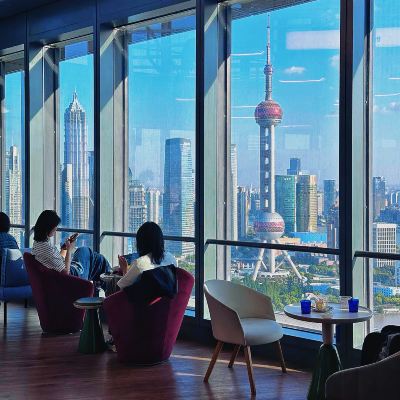
What to finish with
White Magnolia Plaza is useful because it gives you a cleaner, more vertical finish on the same river line. If you want the People’s Cafe stop, this is where the route shifts from walking to lingering: coffee, river view, and enough time to let the skyline do the work.
If you stay until the lights come up, the river becomes less like a border and more like the visual device that ties the whole route together.

Food and pause points
Leave room for coffee or a drink rather than trying to eat aggressively along the route. People’s Cafe is the obvious pause if you want the North Bund view, and that stop makes the route feel less like a photo sprint and more like a proper Shanghai afternoon.
Bottom line
This is the version you use when you want Shanghai to look like Shanghai. Not a generic big city, not a random waterfront, but a city that shows its history and its modern skyline in one deliberate line.
About the Author
Liam Walker
Former architecture and urbanism journalist from the UK, now based in East Asia. Focused on walkable routes, skyline logic, and urban photography.